What is Malaria?
 |
| Map showing the distribution of malaria in the world |
Cause
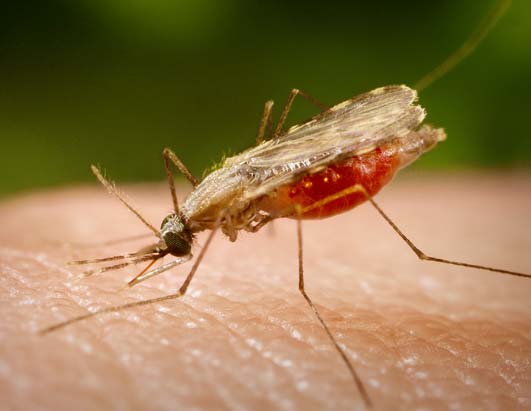
A bite from a parasite-infected mosquito causes malaria. There are five species of Plasmodium (P.) parasites that infect people.
Infection with P. falciparum
- P. falciparum is found mostly in the tropics and subtropics (near the equator).
- Infection with P. falciparum can lead to life-threatening complications after the first few days.
- P. falciparum is often resistant to a popular antimalarial medicine (chloroquine) and needs treatment with other medicines.
Infection with P. vivax, P. malariae, P. ovale, or P. knowlesi
- P. vivax and P. malariae occur all over the tropical regions of the world. P. ovaleis found in western Africa, and P. knowlesi is found in Southeast Asia.
- Infection with P. vivax, P. malariae, or P. ovale is usually not life-threatening, and a person may recover in a month without treatment. But infection with P. knowlesi may be fatal.
- P. vivax, P. malariae, P. ovale, and P. knowlesi are generally not as drug-resistant as P. falciparum.
- P. vivax P. ovale, and P. knowlesi may stay in the liver, requiring further treatment with medicine to prevent relapses.
Transmission
The life cycle of the malaria parasite (Plasmodium) is complicated and involves two hosts, humans and Anophelesmosquitoes. The disease is transmitted to humans when an infected Anopheles mosquito bites a person and injects the malaria parasites (sporozoites) into the blood.Sporozoites travel through the bloodstream to the liver, mature, and eventually infect the human red blood cells. While in red blood cells, the parasites again develop until a mosquito takes a blood meal from an infected human and ingests human red blood cells containing the parasites. Then the parasites reach the Anopheles mosquito's stomach and eventually invade the mosquito salivary glands. When an Anopheles mosquito bites a human, these sporozoites complete and repeat the complex Plasmodium life cycle. P. ovale and P. vivax can further complicate the cycle by producing dormant stages (hypnozoites) that may not develop for weeks to years.

Signs and Symptoms
The signs and symptoms of malaria typically begin 8–25 days following infection; however, symptoms may occur later in those who have taken antimalarial medications as prevention. Initial manifestations of the disease—common to all malaria species—are similar to flu-like symptoms, and can resemble other conditions such as septicemia, gastroenteritis, and viral diseases.
 Common symptoms:
 - abdominal pain
- chills and sweats
- diarrhea, nausea, and vomiting (these symptoms only appear sometimes)
- headache
- high fevers
- low blood pressure causing dizziness if moving from a lying or sitting position to a standing position (also called orthostatic hypotension)
- muscle aches
- poor appetite
In people infected with P. falciparum, the following symptoms may also occur:
- anemia caused by the destruction of infected red blood cells
- extreme tiredness, delirium, unconsciousness, convulsions, and coma
- kidney failure
- pulmonary edema (a serious condition where fluid builds up in the lungs, which can lead to severe breathing problems)
Complications
There are several serious complications of malaria. Among these is the development of respiratory distress, which occurs in up to 25% of adults and 40% of children with severe P. falciparum malaria.

Pathophysiology
 |
| Ring-forms and gametocytes of Plasmodium falciparum in human blood |
Malaria infection develops via two phases: one that involves the liver (exoerythrocytic phase), and one that involves red blood cells, or erythrocytes (erythrocytic phase). When an infected mosquito pierces a person's skin to take a blood meal, sporozoites in the mosquito's saliva enter the bloodstream and migrate to the liver where they infect hepatocytes, multiplying asexually and asymptomatically for a period of 8–30 days.
After a potential dormant period in the liver, these organisms differentiate to yield thousands of merozoites, which, following rupture of their host cells, escape into the blood and infect red blood cells to begin the erythrocytic stage of the life cycle. The parasite escapes from the liver undetected by wrapping itself in the cell membrane of the infected host liver cell.
Within the red blood cells, the parasites multiply further, again asexually, periodically breaking out of their host cells to invade fresh red blood cells. Several such amplification cycles occur. Thus, classical descriptions of waves of fever arise from simultaneous waves of merozoites escaping and infecting red blood cells.
Some P. vivax sporozoites do not immediately develop into exoerythrocytic-phase merozoites, but instead produce hypnozoites that remain dormant for periods ranging from several months (7–10 months is typical) to several years. After a period of dormancy, they reactivate and produce merozoites. Hypnozoites are responsible for long incubation and late relapses in P. vivax infections, although their existence in P. ovale is uncertain.
Diagnosis
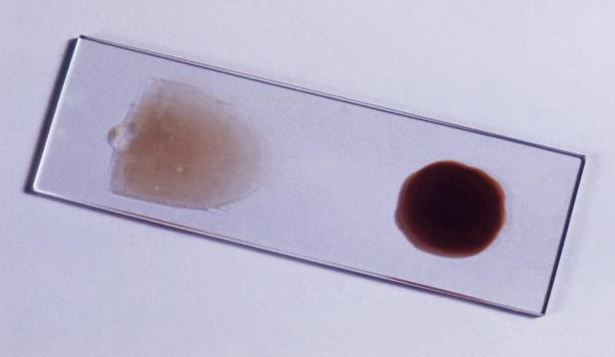 |
| Blood film |
Diagnosis of species can be difficult because the early trophozoites ("ring form") of all four species look identical and it is never possible to diagnose species on the basis of a single ring form; species identification is always based on several trophozoites.
Malaria tests are not routinely ordered by most physicians so recognition of travel history is essential. Consequently, physicians need to order the correct special tests to diagnose malaria, especially in industrialized countries where malaria is seldom seen. Without the travel history, it is likely that other tests will be ordered initially. In addition, the long incubation periods may tend to allow people to forget the initial exposure to infected mosquitoes.


Treatment
 Three main factors determine treatments:
 - the infecting species of Plasmodium parasite
- the clinical situation of the patient
- the drug susceptibility of the infecting parasites.
Drug susceptibility is determined by the geographic area where the infection was acquired. Different areas of the world have malaria types that are resistant to certain medications. The correct drugs for each type of malaria must be prescribed by a doctor who is familiar with malaria treatment protocols. Since people infected with P. falciparum malaria can die (often because of delayed treatment), immediate treatment for P. falciparum malaria is necessary.
 Severe malaria
 - consciousness/coma
- severe anemia
- renal failure
- pulmonary edema
- acute respiratory distress syndrome
- shock
- disseminated intravascular coagulation
- spontaneous bleeding
- acidosis
- hemoglobinuria [hemoglobin in the urine]
- jaundice
- repeated generalized convulsions
- parasitemia [parasites in the blood] of > 5%)
This requires intravenous (IV) drug treatment and fluids in the hospital.

The most effective strategy for P. falciparum infection is the use of artemisinins in combination with other antimalarials (known as artemisinin-combination therapy, or ACT), which reduces the ability of the parasite to develop resistance to any single drug component. These additional antimalarials include amodiaquine, lumefantrine, mefloquine or sulfadoxine/pyrimethamine. Treatment of severe malaria also involves supportive measures that are optimally performed in a critical care unit, including management of high fevers (hyperpyrexia) and the subsequent seizures that may result from it, and monitoring for respiratory depression, hypoglycemia, and hypokalemia.
Nursing Intervention
1. Changes in nutrition less than body requirements related to inadequate food intake, anorexia, nausea / vomiting:
- Assess history of nutrition, including foods that are preferred. Observation and record the client's food input.
- Give extra food to eat little and small.
- Maintain a schedule of regular body weight.
- Discuss the preferred client and input in a pure diet.
- Observation and record the events of nausea / vomiting, and other related symptoms.
- Collaboration with a dietitian.
2. High risk of infection related to a decrease in body systems (main defense is inadequate), invasive procedures:
- Monitor body temperature increases.
- Observe the chills and diaforosis.
- Monitor the sign deviation condition / failure to improve during therapy.
- Provide anti-infective medication as directed.
- Get specimen blood.
3. Hyperthermia is related to increased metabolism of circulating germ dehydration direct effect on the hypothalamus:
- Monitor patient's temperature (degree and pattern), note the chills.
- Monitor the temperature of the environment.
- Give a warm compress bath, avoid using alcohol.
- Give antipyretics.
- Give a cooling blanket
Here's a short documentary in Africa about children diagnosed with malaria. Children dies every 30 seconds from it. It's really devastating to seem them like this.
References:
http://en.wikipedia.org/wiki/Malaria
http://www.webmd.com/a-to-z-guides/malaria-topic-overview
nanda-nursinginterventions.blogspot.com
http://www.medicinenet.com/malaria/article.htm

No comments:
Post a Comment